






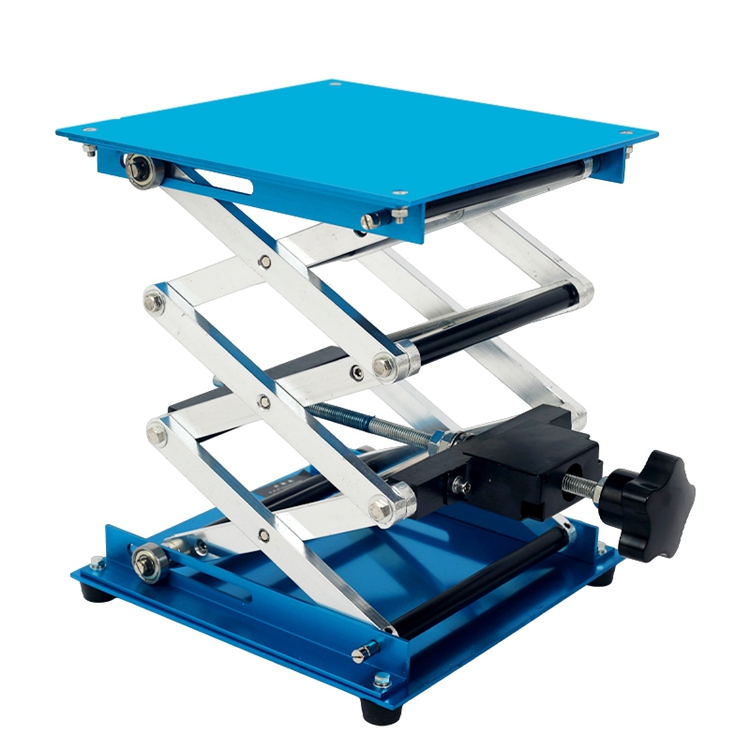
3-Stage Anodized Aluminum Scissor Lift Table
Description: 3-Stage Anodized Aluminum Scissor Lift Table The 3-Stage Anodized Aluminum Scissor Lift Table is a high-precision lifting platform designed for applications requiring extended lifting height, stable vertical movement, and lightweight struct...
Whatsapp:+86 13463710111 +86 17633270825
Email:membershitzler@gmail.com
Product Description:
3-Stage Anodized Aluminum Scissor Lift Table
The 3-Stage Anodized Aluminum Scissor Lift Table is a high-precision lifting platform designed for applications requiring extended lifting height, stable vertical movement, and lightweight structural performance. It is widely used in laboratories, automation systems, optical equipment, electronic inspection platforms, medical devices, and precision manufacturing applications.
Featuring a three-stage scissor lifting mechanism, anodized aluminum alloy structure, and precision positioning system, this lift table provides excellent lifting capability, smooth operation, and reliable performance while maintaining a compact footprint.
Structural Design
The 3-stage anodized aluminum scissor lift table consists of a lightweight aluminum alloy frame, upper and lower mounting platforms, multi-stage scissor mechanism, precision guide components, and drive system.
The three-stage scissor structure uses multiple layers of crossed support arms connected through precision pivot points to achieve a greater lifting range compared with one-stage and two-stage designs. During operation, the drive mechanism controls the expansion and contraction of each scissor section, allowing the platform to move smoothly and accurately.
The multi-stage configuration provides improved height adjustment flexibility while maintaining excellent structural stability. It is suitable for applications where high lifting travel is required within a limited installation space.
The actual specifications, including load capacity, maximum lifting height, platform dimensions, adjustment speed, positioning accuracy, and drive type, depend on the specific product design and application requirements.
Anodized Aluminum Construction Design
The anodized aluminum structure provides outstanding advantages for precision lifting applications.
Compared with traditional steel lifting structures, aluminum alloy offers lightweight construction, excellent corrosion resistance, high surface durability, and easier equipment integration.
The anodizing process creates a protective oxide layer on the aluminum surface, improving resistance to oxidation, scratches, and environmental factors. This makes the lift table suitable for clean environments and applications requiring frequent operation.
The lightweight design reduces installation difficulty while maintaining sufficient mechanical strength and rigidity for stable equipment support.
Three-Stage Scissor Lifting Mechanism
The three-stage scissor mechanism is designed to achieve smooth and precise vertical movement over a larger stroke range.
Compared with single-stage and two-stage models, the three-stage design provides greater lifting height, flexible positioning capability, and improved space efficiency.
Precision-machined pivot points reduce friction and improve motion consistency. Reinforced aluminum alloy arms provide stable support while minimizing overall weight.
The lifting system can be customized with different drive solutions, including manual adjustment, electric motor drive, or automated control systems, according to specific application requirements.
Manufacturing Process
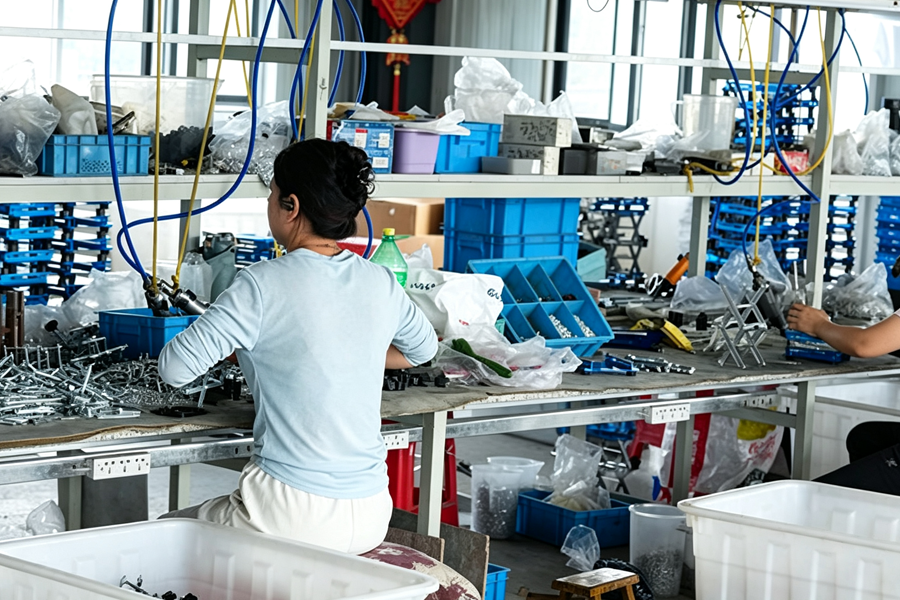
The production process includes aluminum alloy material preparation, CNC machining, anodizing treatment, component assembly, drive system installation, and performance testing.
High-quality aluminum alloy materials are selected to ensure strength, durability, and corrosion resistance. During manufacturing, machining accuracy, surface treatment quality, and assembly precision directly influence lifting stability and product reliability.
After assembly, manufacturers perform inspections on lifting movement, load performance, structural alignment, positioning accuracy, and overall operational performance.
Quality Control Standards
Strict quality control procedures ensure reliable and consistent performance.
Material inspection verifies aluminum alloy composition and mechanical properties.
Dimensional inspection ensures precise machining and accurate assembly.
Anodizing inspection confirms surface protection quality and corrosion resistance.
Load testing verifies safe operation under rated working conditions.
Movement testing evaluates lifting smoothness, repeatability, and stability.
Functional testing confirms long-term operational reliability.
Application and Selection Considerations
Before selecting a 3-stage anodized aluminum scissor lift table, users should evaluate required lifting height, load capacity, platform size, installation space, operating frequency, and positioning requirements.
This type of lift table is suitable for laboratory equipment, optical inspection systems, electronic manufacturing equipment, automation machinery, medical devices, and precision assembly platforms.
Choosing the correct model according to equipment weight and working conditions ensures safe, accurate, and efficient operation.
Conclusion
The 3-Stage Anodized Aluminum Scissor Lift Table provides an advanced lifting solution for applications requiring extended stroke capability, lightweight construction, corrosion resistance, and precise vertical positioning.
A durable anodized aluminum structure, multi-stage scissor mechanism, precision manufacturing process, and strict quality control ensure reliable long-term performance. Customized solutions can be developed according to different load requirements, lifting ranges, and application environments.
References
ISO 12100 – Safety of Machinery: Risk Assessment and Risk Reduction
ISO 13849-1 – Safety-Related Parts of Control Systems
ASTM B580 – Standard Specification for Anodic Oxide Coatings on Aluminum
ASTM B221 – Standard Specification for Aluminum and Aluminum-Alloy Extruded Bars, Rods, Wire, Profiles, and Tubes
ISO 9001 – Quality Management Systems and Manufacturing Quality Control
-

Key Components and Manufacturing Process of a Manual Lift Table
2026-08
-
Manual Lift Table Working Principle and Structural Design Analysis
2026-08
-
Key Components and Manufacturing Process of a Motorcycle Lift Table
2026-08
-
Motorcycle Lift Table Working Principle and Structural Design Analysis
2026-08