







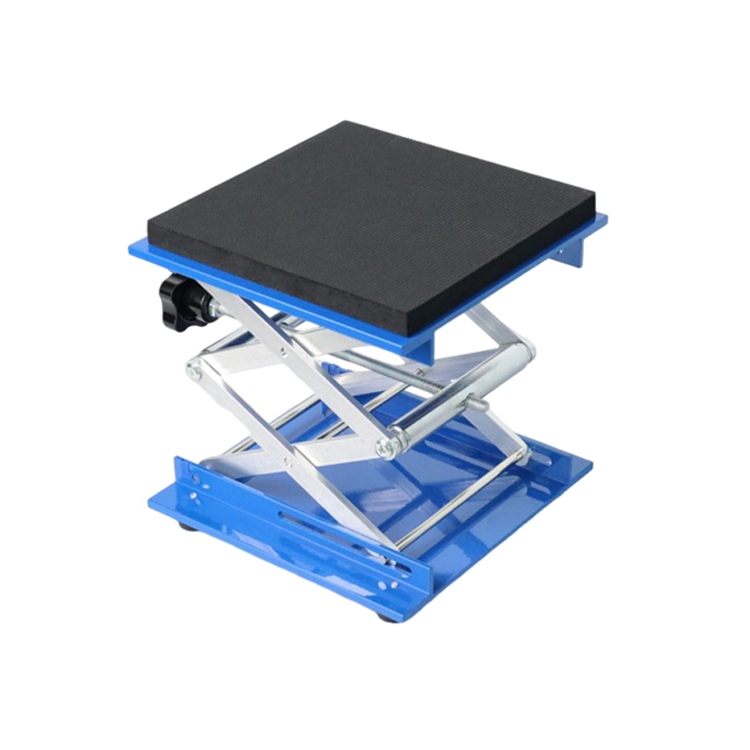
Aluminum Alloy Garbage Disposal Lift Jack with Shock-Absorbing Pad
Description: Aluminum Alloy Garbage Disposal Lift Jack with Shock-Absorbing Pad The Aluminum Alloy Garbage Disposal Lift Jack with Shock-Absorbing Pad is a lightweight and efficient lifting support tool designed for the installation, adjustment, and mai...
Whatsapp:+86 13463710111 +86 17633270825
Email:membershitzler@gmail.com
Product Description:
Aluminum Alloy Garbage Disposal Lift Jack with Shock-Absorbing Pad
The Aluminum Alloy Garbage Disposal Lift Jack with Shock-Absorbing Pad is a lightweight and efficient lifting support tool designed for the installation, adjustment, and maintenance of garbage disposal units and similar heavy equipment. It provides stable lifting assistance, precise height adjustment, and improved installation safety while reducing manual handling effort.
Featuring a high-strength aluminum alloy structure, adjustable scissor lifting mechanism, and shock-absorbing support pad, this lift jack combines lightweight performance with reliable load support, making it suitable for residential, commercial, and professional installation applications.
Structural Design
The lift jack consists of an aluminum alloy scissor frame, adjustable lifting platform, mechanical screw adjustment system, shock-absorbing pad, and reinforced support base.
The scissor lifting mechanism uses crossed support arms connected through precision pivot points to achieve smooth vertical movement. By rotating the adjustment mechanism, the scissor arms extend or retract, allowing installers to accurately position the garbage disposal unit at the required height.
The shock-absorbing pad is installed on the top platform to provide a stable and protective contact surface. It helps distribute the equipment weight evenly while reducing vibration and impact during installation.
The actual specifications, including load capacity, lifting range, platform dimensions, adjustment accuracy, and aluminum alloy grade, depend on the specific product design and application requirements.
Aluminum Alloy Construction Design
The aluminum alloy structure provides excellent advantages for lightweight lifting applications.
Compared with traditional steel lifting tools, aluminum alloy construction offers lower weight, corrosion resistance, easy handling, and excellent structural performance.
The lightweight design allows installers to transport and position the lift jack more easily, especially in confined spaces or residential installation environments where mobility is important.
High-quality aluminum alloy materials provide sufficient strength while reducing overall equipment weight. Precision machining ensures accurate assembly and smooth operation during repeated lifting cycles.
Shock-Absorbing Pad Design
The shock-absorbing pad improves equipment protection and installation stability.
The elastic cushioning pad reduces vibration, absorbs impact forces, and protects the surface of the garbage disposal unit during lifting and positioning.
During installation, equipment alignment often requires fine height adjustment. The shock-absorbing pad provides a stable connection between the lift platform and the equipment, helping prevent scratches, surface damage, and unexpected movement.
The anti-slip surface design further improves safety by maintaining stable contact during adjustment operations.
Lifting Mechanism and Stability Design
The scissor lifting mechanism provides reliable support and accurate positioning.
The reinforced aluminum alloy arms are designed to maintain structural rigidity while keeping the overall weight low. Precision pivot points reduce friction and improve lifting efficiency.
The mechanical adjustment system allows installers to control the lifting height smoothly, making the lift jack suitable for applications where precise alignment is required.
Regular inspection of pivot joints, adjustment components, and support surfaces helps maintain long-term reliability.
Manufacturing Process
The production process includes aluminum alloy material preparation, precision cutting, CNC machining, surface treatment, mechanical assembly, shock pad installation, and performance testing.
High-quality aluminum alloy materials are selected to ensure strength, corrosion resistance, and durability. During manufacturing, material quality, machining accuracy, and assembly precision directly affect the lifting performance and service life of the product.
After assembly, manufacturers conduct inspections on lifting movement, load performance, structural stability, and shock absorption capability.
Quality Control Standards
Strict quality control procedures ensure safe and reliable operation.
Material inspection verifies aluminum alloy quality and mechanical properties.
Dimensional inspection ensures accurate component manufacturing and assembly.
Pivot mechanism inspection confirms smooth movement and reliable operation.
Load testing verifies safe performance under rated working conditions.
Shock absorption testing evaluates cushioning performance and equipment protection.
Functional testing confirms lifting accuracy and overall stability.
Application and Selection Considerations
Before selecting an aluminum alloy garbage disposal lift jack with shock-absorbing pad, users should evaluate equipment weight, installation environment, required lifting height, portability requirements, and frequency of use.
This type of lift jack is suitable for garbage disposal installation, kitchen equipment maintenance, household repair applications, commercial facility servicing, and professional installation operations.
The correct model should be selected according to equipment size and load requirements to ensure safe and efficient operation.
Conclusion
The Aluminum Alloy Garbage Disposal Lift Jack with Shock-Absorbing Pad provides a practical lifting solution for applications requiring lightweight design, stable support, precise adjustment, and equipment protection.
A durable aluminum alloy structure, smooth scissor lifting mechanism, shock-absorbing support pad, and strict quality control ensure reliable performance and convenient operation. Customized solutions can be developed according to different equipment sizes, load requirements, and installation conditions.
References
ISO 12100 – Safety of Machinery: Risk Assessment and Risk Reduction
ISO 13849-1 – Safety-Related Parts of Control Systems
ASTM B221 – Standard Specification for Aluminum and Aluminum-Alloy Extruded Bars, Rods, Wire, Profiles, and Tubes
ISO 9001 – Quality Management Systems and Manufacturing Quality Control
-

Key Components and Manufacturing Process of a Manual Lift Table
2026-08
-
Manual Lift Table Working Principle and Structural Design Analysis
2026-08
-
Key Components and Manufacturing Process of a Motorcycle Lift Table
2026-08
-
Motorcycle Lift Table Working Principle and Structural Design Analysis
2026-08