






Aluminum Test Tube Rack
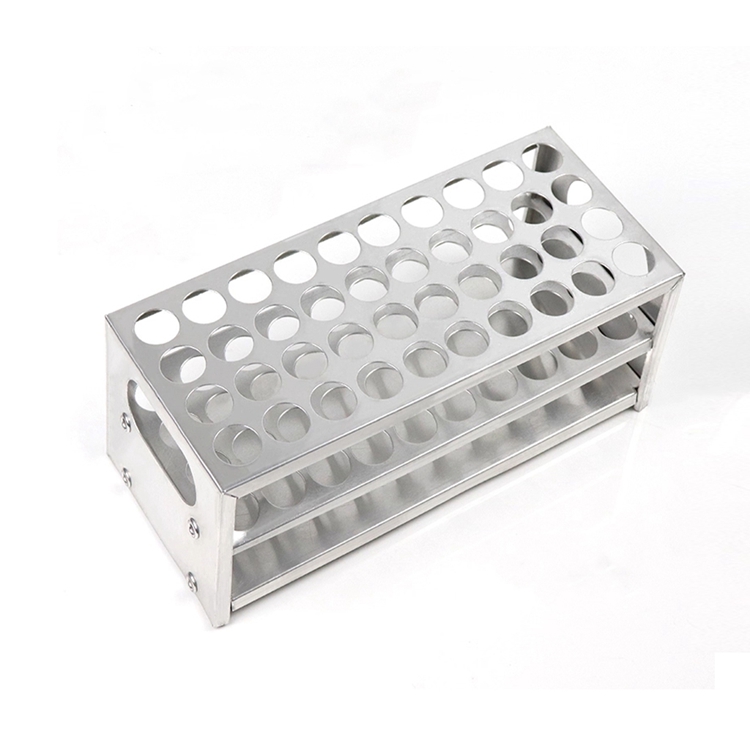
Description: Aluminum Test Tube Rack The Aluminum Test Tube Rack is a lightweight and durable laboratory accessory designed for securely holding, organizing, and transporting test tubes during experiments. Manufactured from high-quality aluminum alloy,...
Whatsapp:+86 13463710111 +86 17633270825
Email:membershitzler@gmail.com
Product Description:
Aluminum Test Tube Rack
The Aluminum Test Tube Rack is a lightweight and durable laboratory accessory designed for securely holding, organizing, and transporting test tubes during experiments. Manufactured from high-quality aluminum alloy, it combines excellent strength, corrosion resistance, and portability, making it suitable for various laboratory and educational applications.
This test tube rack is widely used in chemistry laboratories, biology laboratories, medical testing facilities, research institutions, and educational environments where organized and stable test tube storage is required.
Structural Design
The aluminum test tube rack features a carefully designed frame structure with multiple openings for holding test tubes in an upright position.
The stable rack design prevents test tubes from tipping over and keeps samples organized during experiments. The evenly arranged holes allow convenient access, identification, and handling of multiple samples at the same time.
The lightweight aluminum structure makes the rack easy to move while maintaining sufficient stability. The smooth edges and precise hole dimensions help protect test tubes from accidental damage.
The actual specifications, including number of holes, tube diameter compatibility, rack dimensions, aluminum thickness, and surface treatment, depend on the specific product design.
Aluminum Alloy Material Advantages
The rack is manufactured from aluminum alloy, a material known for its excellent balance between strength and weight.
The aluminum construction provides lightweight handling, corrosion resistance, and reliable mechanical durability.
Compared with plastic racks, aluminum models offer better heat resistance and structural strength. Compared with steel racks, they provide reduced weight and improved portability.
The aluminum surface can be anodized or treated with protective finishing to improve wear resistance, appearance, and long-term service performance.
Functional Performance
The main function of the aluminum test tube rack is to provide safe and efficient test tube organization.
The precise positioning holes ensure stable placement of test tubes while allowing quick identification and convenient operation.
The rack is suitable for holding different types of laboratory tubes, including glass test tubes, centrifuge tubes, sample tubes, and other cylindrical containers according to the designed hole size.
Its open structure improves airflow around tubes and allows easy observation of samples during experiments.
Manufacturing Process
The manufacturing process includes aluminum material preparation, cutting, CNC machining or stamping, surface treatment, assembly, and quality inspection.
During production, dimensional accuracy, hole alignment, surface quality, and structural strength are carefully controlled.
Precision machining ensures that each opening maintains consistent size and spacing, while surface finishing improves corrosion resistance and provides a smooth user experience.
Finished products are inspected for stability, appearance, and practical usability.
Application Areas
Aluminum test tube racks are suitable for a wide range of laboratory applications.
In chemistry laboratories, they are used for organizing test tubes during chemical reactions, sample preparation, and analysis procedures.
In biology and medical laboratories, they help arrange sample tubes for testing and storage.
In educational environments, they provide students with a safe and convenient tool for laboratory experiments.
They are also suitable for research centers and industrial testing facilities requiring durable sample organization equipment.
Selecting the correct rack according to tube size, sample quantity, laboratory environment, and operating requirements ensures optimal performance.
Usage and Maintenance Considerations
Before use, users should confirm that the test tubes match the rack hole size and are placed securely.
Avoid applying excessive force when inserting or removing tubes to prevent damage.
Keep the aluminum surface clean and inspect regularly for deformation or surface damage.
For long-term use, storing the rack in a dry environment and avoiding strong chemical exposure can help extend service life.
Quality Control Standards
Reliable aluminum test tube racks should undergo strict quality inspections.
Material inspection verifies aluminum alloy quality and durability.
Dimensional inspection ensures accurate hole size and spacing.
Surface inspection evaluates finish quality and corrosion resistance.
Stability testing confirms secure tube support.
Functional testing ensures reliable laboratory operation.
Conclusion
The Aluminum Test Tube Rack provides an effective solution for applications requiring lightweight construction, stable tube support, corrosion resistance, and convenient laboratory organization.
With its durable aluminum alloy structure, precise manufacturing, and user-friendly design, it is an essential accessory for laboratories, educational facilities, and professional research environments.
References
ISO 9001 – Quality Management Systems and Manufacturing Quality Control
ISO 17025 – General Requirements for the Competence of Testing and Calibration Laboratories
ASTM B221 – Standard Specification for Aluminum and Aluminum-Alloy Extruded Bars, Rods, Wire, Profiles, and Tubes
ASTM B244 – Standard Test Method for Measurement of Thickness of Anodic Coatings on Aluminum
IEC 61010-1 – Safety Requirements for Measurement, Control, and Laboratory Use Electrical Equipment
-

Key Components and Manufacturing Process of a Manual Lift Table
2026-08
-
Manual Lift Table Working Principle and Structural Design Analysis
2026-08
-
Key Components and Manufacturing Process of a Motorcycle Lift Table
2026-08
-
Motorcycle Lift Table Working Principle and Structural Design Analysis
2026-08