






White Coated 2-Prong Flask Clamp with Red Rubber Sleeves
Description: White Coated 2-Prong Flask Clamp with Red Rubber Sleeves The White Coated 2-Prong Flask Clamp with Red Rubber Sleeves is a practical laboratory support accessory designed for securely holding flasks, test tubes, reaction vessels, and other...
Whatsapp:+86 13463710111 +86 17633270825
Email:membershitzler@gmail.com
Product Description:
White Coated 2-Prong Flask Clamp with Red Rubber Sleeves
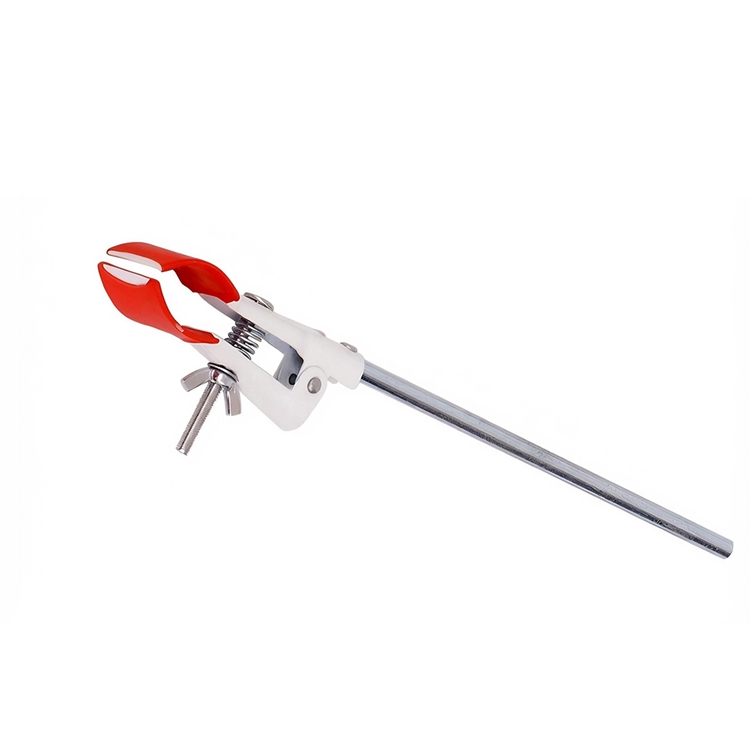
The White Coated 2-Prong Flask Clamp with Red Rubber Sleeves is a practical laboratory support accessory designed for securely holding flasks, test tubes, reaction vessels, and other glassware during experiments. It combines a strong metal clamp structure with a white protective coating and soft red rubber sleeves to provide stable gripping performance while protecting delicate laboratory containers from damage.
This clamp is widely used in chemistry laboratories, educational institutions, research centers, medical laboratories, and industrial testing environments where safe and reliable glassware support is required.
Structural Design
The flask clamp consists of a reinforced metal body, two adjustable gripping prongs, a tightening screw mechanism, and red rubber protective sleeves.
The two-prong design provides balanced gripping force and stable support, allowing the clamp to securely hold cylindrical and round laboratory glassware. The adjustable jaws can be adapted to different equipment sizes within the working range.
The compact structure allows convenient installation on laboratory stands and support rods. The actual specifications, including clamping range, load capacity, jaw opening size, material thickness, and connection type, depend on the specific product design.
White Coated Metal Construction
The metal body provides strong mechanical support and reliable durability during laboratory operations.
The white coating offers improved corrosion resistance, surface protection, and a clean professional appearance. It helps protect the metal from moisture, oxidation, and daily wear in laboratory environments.
Compared with untreated metal clamps, the coated surface provides additional protection and helps extend product service life. The smooth finish also makes routine cleaning and maintenance more convenient.
Red Rubber Sleeve Protection
The red rubber sleeves provide a soft contact surface between the clamp and the glassware.
The rubber-covered gripping points increase friction, reduce vibration, and protect glass surfaces from scratches or excessive pressure.
The flexible rubber sleeves help distribute the clamping force more evenly, reducing the risk of damage to fragile containers. They also improve holding stability during heating, mixing, observation, and other laboratory procedures.
The rubber material should be selected according to the operating temperature and chemical conditions of the application.
Clamping Mechanism and Performance
The two-prong clamping mechanism is designed for easy adjustment and reliable fixation.
The threaded screw system allows users to control the jaw opening and gripping pressure according to different glassware sizes. The secure locking structure helps maintain stable positioning throughout experimental operations.
The simple mechanical design allows quick installation and adjustment, making it suitable for laboratory setups that require frequent changes of equipment position.
Manufacturing Process
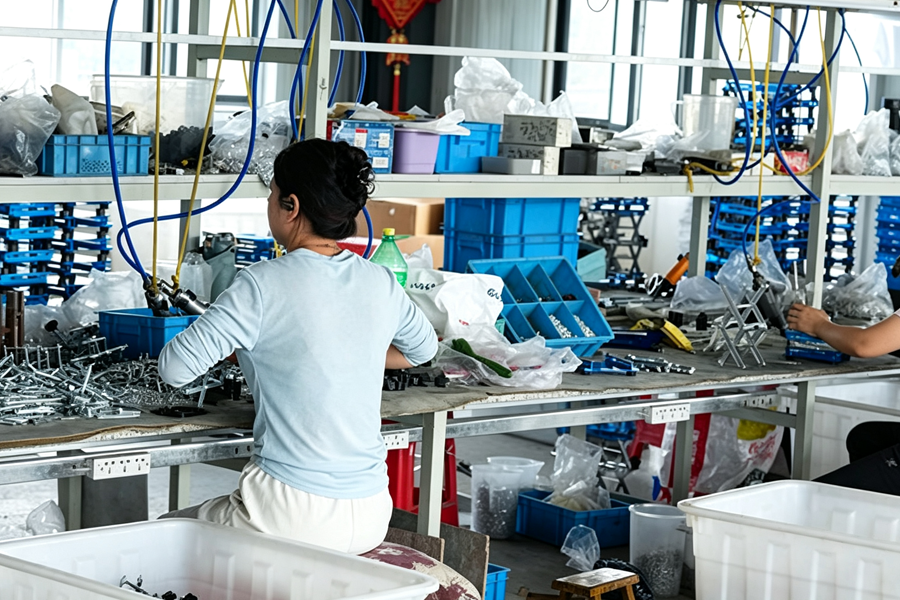
The manufacturing process includes metal forming, machining, coating treatment, rubber sleeve installation, assembly, and performance testing.
During production, material quality, coating uniformity, dimensional accuracy, rubber fitting precision, and mechanical strength are carefully controlled to ensure consistent product performance.
After assembly, manufacturers perform inspections on jaw alignment, gripping stability, surface quality, and overall functionality.
Quality Control Standards
Strict quality control procedures ensure reliable laboratory performance.
Material inspection verifies the quality of metal components and rubber materials.
Dimensional inspection ensures accurate manufacturing and compatibility with laboratory accessories.
Surface inspection evaluates coating quality and corrosion resistance.
Grip testing confirms secure holding performance.
Load testing verifies safe operation under rated conditions.
Functional testing ensures smooth adjustment and reliable use.
Application and Selection Considerations
Before selecting a white coated two-prong flask clamp, users should evaluate glassware size, equipment weight, operating temperature, chemical exposure, required holding force, and mounting compatibility.
This clamp is suitable for supporting laboratory flasks, test tubes, reaction vessels, condensers, and other experimental glassware.
Choosing the correct clamp size ensures safe glassware handling, stable support, and improved experimental efficiency.
Conclusion
The White Coated 2-Prong Flask Clamp with Red Rubber Sleeves provides a reliable solution for applications requiring secure gripping, glassware protection, corrosion resistance, and convenient adjustment.
Its durable coated metal structure, soft rubber sleeve protection, and practical two-prong design make it an essential accessory for laboratory support systems. With proper selection and operation, it delivers stable performance for educational, research, and professional laboratory environments.
References
ISO 9001 – Quality Management Systems and Manufacturing Quality Control
ISO 12100 – Safety of Machinery: Risk Assessment and Risk Reduction
IEC 61010-1 – Safety Requirements for Measurement, Control, and Laboratory Use Electrical Equipment
ASTM D2000 – Standard Classification System for Rubber Products in Automotive Applications
ASTM B117 – Standard Practice for Operating Salt Spray (Fog) Apparatus
-

Key Components and Manufacturing Process of a Manual Lift Table
2026-08
-
Manual Lift Table Working Principle and Structural Design Analysis
2026-08
-
Key Components and Manufacturing Process of a Motorcycle Lift Table
2026-08
-
Motorcycle Lift Table Working Principle and Structural Design Analysis
2026-08