







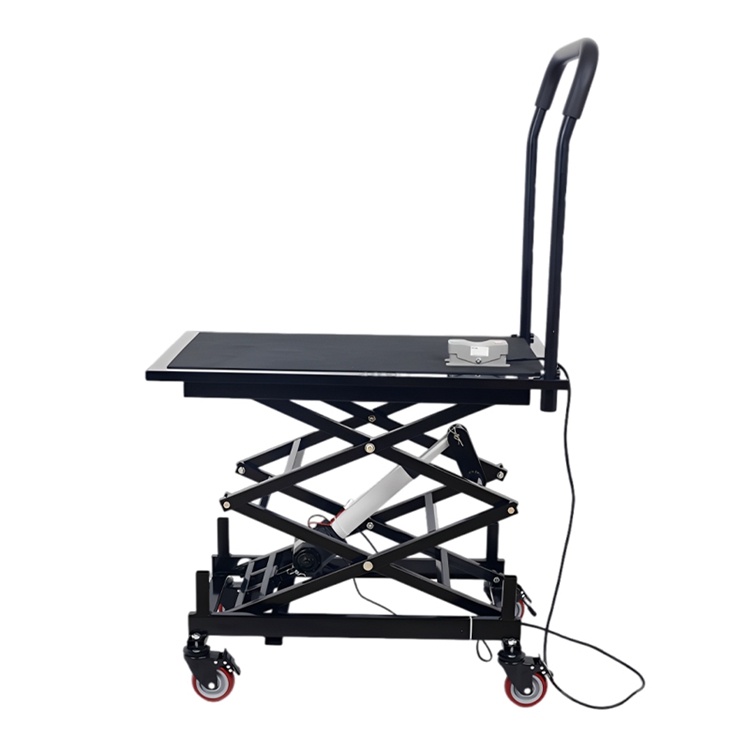
Electric Work Platform
Description: Electric Work Platforms: Structure, Applications, and Key Performance Requirements Electric work platforms are lifting equipment designed to provide a stable elevated working area for personnel performing installation, maintenance, inspecti...
Whatsapp:+86 13463710111 +86 17633270825
Email:membershitzler@gmail.com
Product Description:
Electric Work Platforms: Structure, Applications, and Key Performance Requirements
Electric work platforms are lifting equipment designed to provide a stable elevated working area for personnel performing installation, maintenance, inspection, warehouse, and construction tasks. Compared with traditional manually operated platforms, electric work platforms use battery-powered drive and lifting systems to improve mobility, positioning accuracy, and working efficiency.
Main Structural Components
A typical electric work platform consists of a working platform, lifting mechanism, chassis, drive system, battery, control system, and safety devices.
The working platform provides a stable area for operators and tools. Its dimensions and rated load should be selected according to the intended application.
The lifting mechanism determines the platform's maximum working height and lifting stability. Depending on the design, manufacturers may use scissor mechanisms, mast systems, or other vertical lifting structures.
The electric drive system provides smooth movement and precise positioning. Battery-powered motors eliminate the need for external power cables during normal operation and are suitable for indoor environments.
Electric Power and Battery System
The battery system is a critical component of an electric work platform. It supplies power to both the lifting and driving systems.
A suitable battery should provide sufficient operating time, stable voltage output, and reliable charging performance. Battery capacity should be selected according to platform load, working height, operating frequency, and travel distance.
Modern electric platforms may use maintenance-free battery systems to reduce routine maintenance requirements and improve operational convenience.
Safety and Stability Design
Safety is one of the most important considerations when designing an electric work platform.
The platform should incorporate emergency stop controls, overload protection, limit switches, braking systems, and anti-tilt or stability protection where applicable.
The chassis and lifting structure must provide sufficient stability under rated working conditions. Guardrails and platform access systems should also be designed to reduce the risk of operator falls.
Before operation, users should inspect the platform, lifting mechanism, controls, tires, battery condition, and safety devices.
Manufacturing and Quality Control
Manufacturing an electric work platform involves structural fabrication, component assembly, electrical installation, testing, and final inspection.
Steel structural components are typically processed through cutting, welding, machining, and surface treatment. Welding quality and dimensional accuracy are particularly important because they directly affect structural strength and stability.
Electrical components, motors, controllers, batteries, and control switches are installed and tested according to the equipment design.
Finished platforms should undergo functional and safety testing to verify lifting performance, travel operation, braking, emergency controls, rated load performance, and overall stability.
Selection Considerations
When selecting an electric work platform, buyers should evaluate working height, platform capacity, overall dimensions, lifting mechanism, battery capacity, travel speed, operating environment, and safety configuration.
Indoor applications may prioritize compact dimensions and low noise, while outdoor applications may require stronger chassis construction and improved terrain adaptability.
Conclusion
Electric work platforms combine mechanical lifting technology with battery-powered drive systems to provide efficient elevated access for a wide range of professional applications. Reliable structural design, stable electrical systems, effective safety protection, and strict quality control are essential for dependable operation.
Selecting equipment according to working height, load requirements, operating environment, and safety standards can improve productivity while supporting safer elevated work practices.
References
OSHA – Powered Industrial Trucks and Aerial Lift Safety Guidance
ANSI/SAIA – Mobile Elevating Work Platform Safety Standards
ISO 16368 – Mobile Elevating Work Platforms: Design, Calculations, Safety Requirements and Tests
ISO 9001 – Quality Management Systems and Manufacturing Quality Control
-

Key Components and Manufacturing Process of a Manual Lift Table
2026-08
-
Manual Lift Table Working Principle and Structural Design Analysis
2026-08
-
Key Components and Manufacturing Process of a Motorcycle Lift Table
2026-08
-
Motorcycle Lift Table Working Principle and Structural Design Analysis
2026-08