







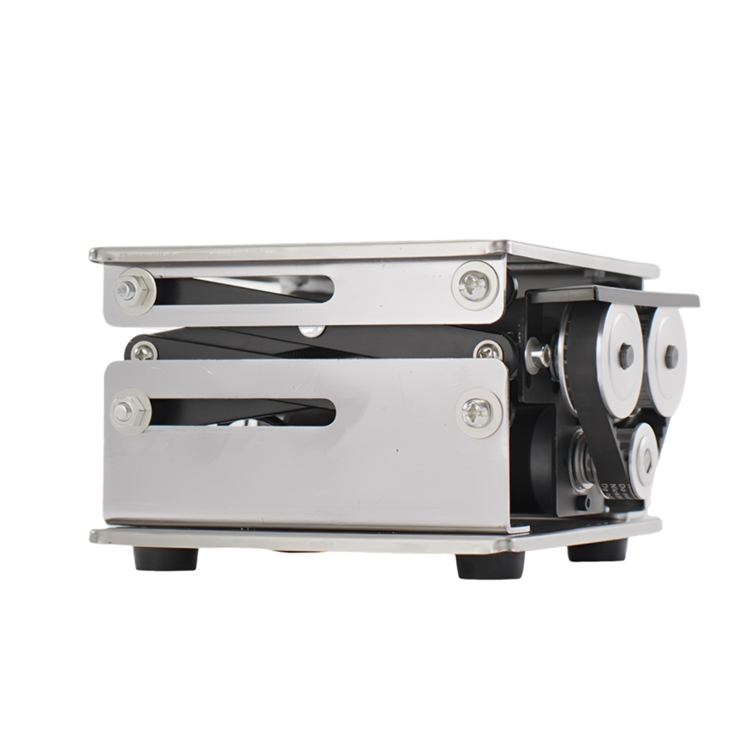
Synchronous Pulley Driven Electric Lift Table / Timing Belt Driven Model
Description: Synchronous Pulley Driven Electric Lift Table / Timing Belt Driven Model The Synchronous Pulley Driven Electric Lift Table / Timing Belt Driven Model is a precision lifting platform designed for applications requiring smooth motion, high re...
Whatsapp:+86 13463710111 +86 17633270825
Email:membershitzler@gmail.com
Product Description:
Synchronous Pulley Driven Electric Lift Table / Timing Belt Driven Model
The Synchronous Pulley Driven Electric Lift Table / Timing Belt Driven Model is a precision lifting platform designed for applications requiring smooth motion, high repeatability, low operating noise, and reliable vertical positioning. It is widely used in automation equipment, inspection systems, electronic manufacturing, laboratory devices, medical equipment, and precision positioning applications.
Featuring a synchronous pulley transmission system, timing belt drive mechanism, and electric lifting control, this lift table provides fast response, stable movement, and excellent operational efficiency compared with traditional mechanical drive solutions.
Structural Design
The lift table consists of a precision lifting platform, synchronous pulley system, timing belt transmission mechanism, electric motor, guide structure, fixed base, and control system.
The timing belt driven lifting structure converts motor rotation into controlled vertical movement through the interaction between the pulley and belt system. When the motor operates, the synchronous pulley rotates and drives the timing belt, allowing the lifting mechanism to move smoothly and accurately.
The synchronous transmission design ensures stable power transfer while minimizing backlash and vibration. It is especially suitable for applications requiring frequent movement, rapid positioning, and consistent repeatability.
The actual technical parameters, including load capacity, lifting height, lifting speed, positioning accuracy, platform dimensions, and operating cycle, depend on the specific engineering design and application requirements.
Synchronous Pulley and Timing Belt Drive System
The synchronous pulley drive system is the key transmission component of this electric lift table.
Compared with traditional screw-driven systems, the timing belt mechanism provides high-speed operation, low noise performance, smooth motion, and reduced mechanical friction.
The synchronous belt uses precise tooth engagement with the pulley to prevent slipping during operation, ensuring accurate motion control and stable transmission performance.
The drive system can be customized according to application requirements, including different motor types, belt materials, pulley designs, and control methods.
Proper selection of belt tension and pulley alignment is essential to maintain high transmission efficiency, long service life, and reliable positioning accuracy.
Precision Motion and Stability Design
The lift table is designed with precision guide mechanisms to ensure stable vertical movement.
The guide structure helps reduce lateral movement and improves platform rigidity during lifting operations. Combined with the synchronous belt system, it provides smooth acceleration and deceleration performance.
The electric control system allows precise adjustment of lifting speed and position, making the lift table suitable for applications requiring repeatable movement and accurate positioning.
Manufacturing Process
The production process includes structural material preparation, precision machining, pulley manufacturing, timing belt installation, motor assembly, electrical integration, and performance testing.
High-quality materials are selected to ensure mechanical strength and durability. During manufacturing, component accuracy, belt alignment, and assembly precision directly affect the lifting performance and reliability of the equipment.
After assembly, manufacturers conduct inspections on movement smoothness, transmission performance, positioning accuracy, noise level, and overall stability.
Quality Control Standards
Strict quality control procedures ensure reliable and safe operation.
Material inspection verifies that structural components meet required strength standards.
Dimensional inspection ensures all parts meet precision manufacturing requirements.
Pulley and belt inspection confirms correct alignment and transmission performance.
Functional testing evaluates lifting, lowering, and control operation.
Positioning accuracy testing verifies repeatable movement performance.
Load testing confirms safe operation under designed working conditions.
Application and Selection Considerations
Before selecting a synchronous pulley driven electric lift table, users should evaluate required load capacity, lifting speed, positioning accuracy, installation space, operating frequency, and environmental conditions.
This type of lift table is suitable for automated production lines, precision inspection equipment, electronic assembly systems, laboratory platforms, medical devices, and customized industrial automation solutions.
Conclusion
The Synchronous Pulley Driven Electric Lift Table / Timing Belt Driven Model provides an efficient lifting solution for applications requiring fast response, smooth operation, precise positioning, and reliable performance.
A synchronous pulley transmission system, durable timing belt mechanism, precision guide structure, and strict quality control ensure stable and long-lasting operation. Customized solutions can be developed according to specific load requirements, lifting range, and application conditions.
References
ISO 12100 – Safety of Machinery: Risk Assessment and Risk Reduction
ISO 13849-1 – Safety-Related Parts of Control Systems
IEC 60204-1 – Safety of Machinery: Electrical Equipment of Machines
ISO 9001 – Quality Management Systems and Manufacturing Quality Control
-

Key Components and Manufacturing Process of a Manual Lift Table
2026-08
-
Manual Lift Table Working Principle and Structural Design Analysis
2026-08
-
Key Components and Manufacturing Process of a Motorcycle Lift Table
2026-08
-
Motorcycle Lift Table Working Principle and Structural Design Analysis
2026-08