







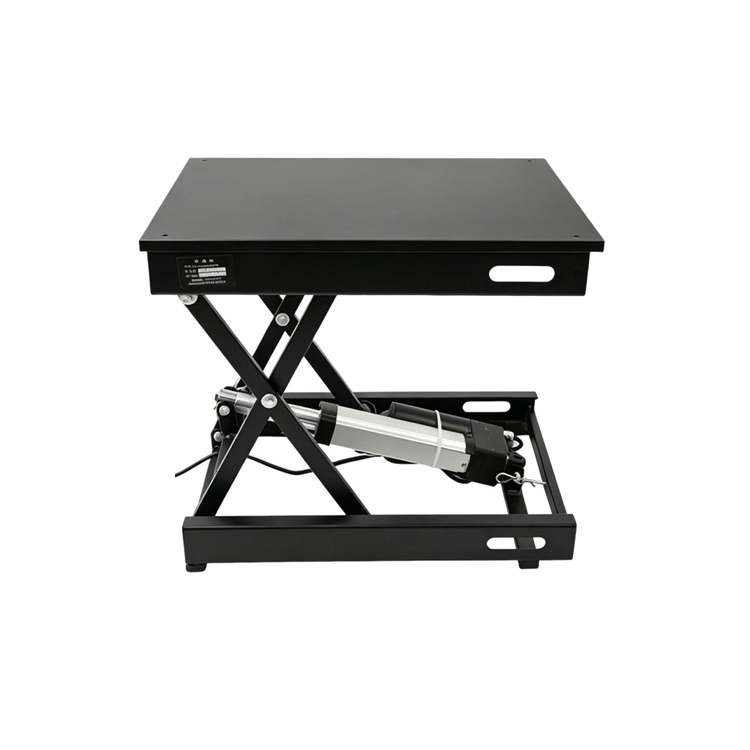
300x400mm Single Motor Single Scissor Lift Table with Steel Top
Description: 300 × 400 mm Single Motor Single Scissor Lift Table with Steel Top The 300 × 400 mm Single Motor Single Scissor Lift Table with Steel Top is a compact electric lifting solution designed for applications requiring precise height adjustment...
Whatsapp:+86 13463710111 +86 17633270825
Email:membershitzler@gmail.com
Product Description:
300 × 400 mm Single Motor Single Scissor Lift Table with Steel Top
The 300 × 400 mm Single Motor Single Scissor Lift Table with Steel Top is a compact electric lifting solution designed for applications requiring precise height adjustment, stable support, and durable working surfaces. It is commonly used in laboratories, workshops, production lines, inspection equipment, small material handling systems, and customized industrial applications.
Featuring a single scissor lifting structure, single motor drive system, and steel tabletop, this lift table provides a reliable solution for light-duty lifting, positioning, and ergonomic workstation applications.
Structural Design
The lift table consists of a single scissor lifting frame, electric drive system, mounting base, lifting platform, and steel top surface.
The single scissor mechanism operates through two crossed lifting arms connected by pivot joints. When the motor activates the lifting system, the scissor arms extend or retract to achieve smooth vertical movement.
The 300 × 400 mm specification generally refers to the platform size or frame dimensions. The actual technical parameters, including rated load capacity, lifting height, stroke range, and lifting speed, depend on the specific design and application requirements.
The compact structure allows installation in limited spaces while maintaining sufficient stability and mechanical strength.
Single Motor Drive System
The single motor provides lifting power through an electric transmission mechanism.
Depending on the design configuration, the motor may drive a screw mechanism, linear actuator, or other electromechanical lifting system. The drive system should be selected according to working load, lifting frequency, speed requirements, and duty cycle.
A properly matched motor ensures smooth operation, reduces energy consumption, and improves the service life of the lifting components.
The control system should provide stable acceleration and braking performance to reduce impact loads and ensure precise positioning.
Single Scissor Mechanism Design
The single scissor structure offers a simple and efficient lifting solution with fewer moving components compared with multi-stage mechanisms.
Accurate pivot alignment and precise manufacturing are essential for achieving smooth movement and reducing mechanical stress.
The lifting arms are typically manufactured from high-strength steel materials to provide sufficient load-bearing capability. Pivot points may use bearings, bushings, or wear-resistant components to improve durability and reduce friction.
Regular inspection and maintenance help ensure reliable operation over long service periods.
Steel Top Design
The steel tabletop provides a strong, durable, and easy-to-maintain working surface.
Compared with other tabletop materials, steel offers advantages including high strength, impact resistance, wear resistance, and suitability for industrial environments.
The steel surface can be customized with different thicknesses, dimensions, coatings, or finishing treatments according to customer requirements.
A secure connection between the steel top and lifting frame ensures stable support for tools, products, and equipment during operation.
Manufacturing Process
The production process includes steel cutting, bending, drilling, welding, machining, surface treatment, motor installation, assembly, and performance testing.
High-quality steel materials are selected to ensure structural reliability. During fabrication, welding quality, dimensional accuracy, and assembly precision directly affect the final lifting performance.
After assembly, manufacturers inspect frame alignment, motor operation, lifting movement, tabletop installation, and overall stability.
Quality Control Standards
Strict quality control procedures ensure safe and reliable performance.
Material inspection verifies raw material strength and quality.
Dimensional inspection confirms component accuracy and proper fitting.
Welding inspection ensures structural strength and durability.
Functional testing evaluates lifting and lowering performance.
Load testing verifies safe operation under rated conditions.
Surface treatment inspection ensures corrosion protection and long-term durability.
Application and Selection Considerations
Before selecting a 300 × 400 mm single motor single scissor lift table with steel top, users should evaluate required lifting height, load capacity, tabletop size, installation space, operating environment, and working frequency.
This type of lift table is suitable for compact workstations, small equipment positioning, assembly applications, and industrial height-adjustable platforms.
Conclusion
The 300 × 400 mm Single Motor Single Scissor Lift Table with Steel Top provides a compact and reliable lifting solution for industrial and commercial applications. A strong steel structure, reliable motor system, precise manufacturing process, and strict quality control ensure stable operation and long service life.
For customized applications, manufacturers can optimize the design according to specific load requirements, lifting range, and working conditions.
References
ISO 12100 – Safety of Machinery: Risk Assessment and Risk Reduction
ISO 13849-1 – Safety-Related Parts of Control Systems
ANSI/ASME B20.1 – Safety Standard for Conveyors and Related Equipment
ISO 9001 – Quality Management Systems and Manufacturing Quality Control
-

Key Components and Manufacturing Process of a Manual Lift Table
2026-08
-
Manual Lift Table Working Principle and Structural Design Analysis
2026-08
-
Key Components and Manufacturing Process of a Motorcycle Lift Table
2026-08
-
Motorcycle Lift Table Working Principle and Structural Design Analysis
2026-08